Techquity: Fostering Diversity and Wealth Creation in Tech with William A. Adams
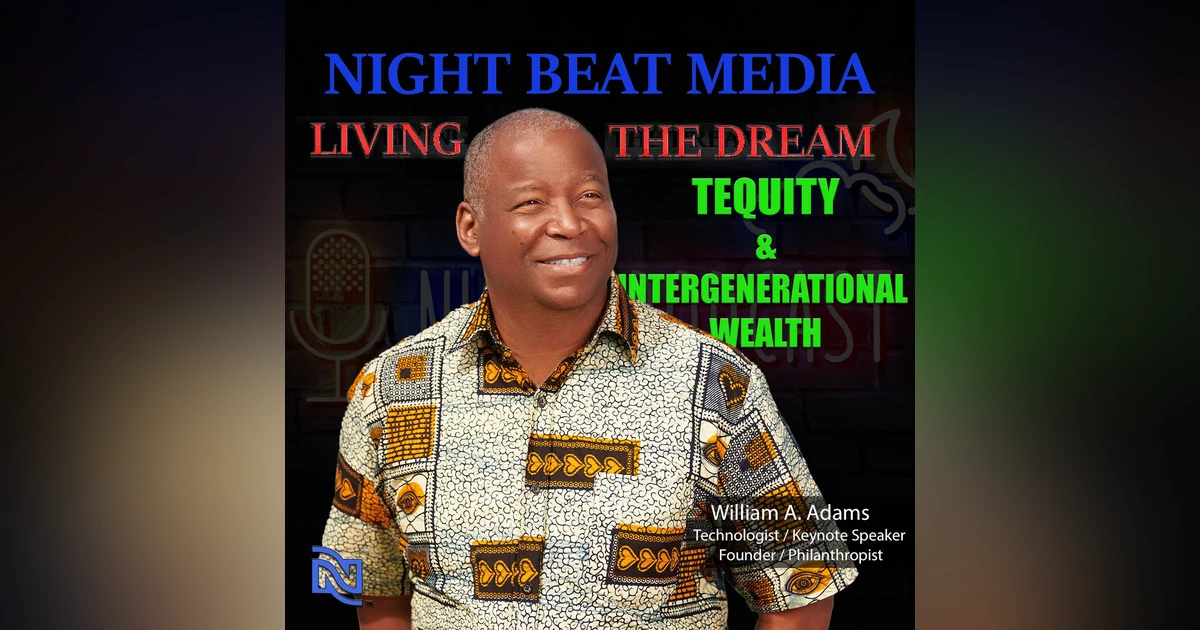

Join us as we sit down with William A. Adams, a visionary in the technology realm whose epic journey has shaped the digital landscape. From his early days tinkering with computers to becoming a beacon of innovation and diversity in tech, William...

 Apple Podcasts

 Spotify

 Castro

 RSS Feed
Join us as we sit down with William A. Adams, a visionary in the technology realm whose epic journey has shaped the digital landscape. From his early days tinkering with computers to becoming a beacon of innovation and diversity in tech, William shares the spirit of 'Techquity'—his term for intergenerational wealth creation in the tech sector for women and minorities. Listen in as he discusses the critical role of equity ownership, be it through stocks, patents, or company stakes, for economic prosperity that keeps up with the fast-paced evolution of the tech industry.
In this heart-to-heart, William sheds light on the resilience needed to navigate the entrepreneurial landscape, marked by systemic barriers and financial biases. Hear about the grit and creativity that powered his ascent from founding a tech company to leaving a mark on global initiatives at Microsoft. William's advice rings clear for aspiring entrepreneurs from underrepresented groups: to harness technology in every passion, even in fields as time-honored as agriculture, and to dream big backed by unshakeable self-belief.
Our conversation wraps up with a forward-looking discussion on education's future in an AI-centric world, emphasizing the need to merge technological acumen with the humanities. William also introduces the LEAP program, aimed at fostering diversity in tech through innovative internships. He leaves us with a reminder of the communal benefits of progress, likening it to a tide that raises all ships, and urges us to create our own opportunities. If William's journey and insights stir something in you, remember to share this episode and help spread the message of equitable success in technology.
Become a supporter of this podcast: https://www.spreaker.com/podcast/night-beat-media-living-the-dream--2752105/support.
https://arkglobalpartners.com/
0:31 Welcome to night Beat Media's Living the Dream podcast with your host Gregory Tucker, where we discussed the entrepreneur's journey of turning a dream into reality, showing you how to learn, overcome, and acquire strategic action steps. If you're ready to turn your dream into a reality, then get ready to take action. Here's your host, Gregory Tucker. Welcome to this episode. Today, we have a very special guest with us. His name is William A. Adams. He is a technologist and engineering trail blazer and a philanthropist. With over thirty five years in the tech industry, William has run his own company.
1:23 He's been recorded in the Computer History Museum, which is the equivalent of the Computer Hall of Fame, and served as the first technical advisor to Microsoft's current CTO, Kevin Scott. William has founded in overseeing global initiatives at Microsoft, from the XML technologies as early as nineteen ninety eight to the d Diversity and Inclusion Initiatives in twenty fifteen, the LEAP program with a focused on diverse hiring.
2:12 He was named Microsoft's D and I and that's Diversity and Inclusion Program of the Year in twenty twenty. Today William is focused on techquity, and we're going to explore that a little later, the creation of intergenerational wealth through equity based shares of technology for women and minority owned businesses. He is turning his years of experience in wisdom into actionable tools for the creation of modern tech centered businesses. When he's not writing code, giving talks, or otherwise building technology, William enjoys woodworking, biking, and the pleasures of family life. Let's welcome William to our show. Hey, hey, William, thank you, thank you for that intro. Now I read all of that, so we know your titles. Now. We always like to ask our guest to tell us about yourself. Yeah, well about me, give me one second here.
3:36 There was one of those issues I had spoke about. Yeah, there we are, OK. Yeah, well about about me. I've been in tech my whole life. I mean literally, I got my first computer when I was twelve years old. And that was way back in the day, back in the seventies, nineteen seventies, and that was the birth of the personal computers as actually before the Apple computers came out just by a couple of years around the same time. So I grew up in tech. I was self taught programming. I went to UC Berkeley eventually and learned a bunch of stuff there, and my brother and I started a company in nineteen eighty four called Adamation to do software, you know, and this is the heyday of soccer in Silicon Valley, the birth of like I said, Apple was roaring by then. Some companies that are still around, like Adobe, were created and fermenting at that time. So I just said technology, technology, Technology starved our way through, made a little bit of money, made some famous sales, hooked up with Steve Jobs for a while to sell his next computers, and then eventually in nineteen ninety eight, I went off to Microsoft and I was there for quite some time. I just retired from Microsoft last year actually about a year ago. But this is things I've done. And at
5:08 Microsoft, I did all sorts of things technology related. But the crown and you kind of read it. In twenty fifteen, I started this program called Leap because it was just a revelation. It's like, well, here I am black guy in tech. It's time to give back, not just you know, not just to make money, but to give back to my community. And I would clearly stay. Up until that point, I wasn't really thinking about my responsibility to my community, my home tribe, if you will. So I created this program because we were like every other tech company saying, oh, we can't hire women of the minorities. Where are they?
5:53 There's not enough of them. It's like, no, there's plenty of us. You're just not looking in the right places, You're not thinking in the right way. So that's what I did. So since that time, I've been much more focused on I know that having an equity share of technology is what creates wealth. So that's what I've been focused on doing. And since I've left Microsoft, that's that's my focus. So that's that's me. And is that where the uh term tequity would is something that you coined? Yeah? Yeah, now you'll you'll find other uses of that term out there in the wild. But my I did this about three years ago. I was just thinking, it's like, how do I, in a single word, explain to people what I'm talking about? And tequity is like, well, technology, okay, fine, we all know what technology is. It's computer stuff mostly, right, Automation Equity is a harder one because people don't not all people understand what equity is. Equity just means you own a piece of the thing. Right. I own stock in Microsoft, Therefore I have an equity share. As their stock price goes up, my wealth goes up because I own a piece of the company. Right. So tequity is combining those two things and saying owning a piece of technology from a share perspective, meaning patents, shares, and stock running companies that are tech based is a good
7:28 thing because technology is where all the money is at right now. Right If you go look at the Forbes list of top hundred billionaires in the world or whatever it is, the top six or eight are always tech bros, you know, and that tells you something. One hundred years ago, it would have been a bunch of industrialists, right, railroad barons, steel, maybe tex stiles, bankers, stuff like that. But today, and for the last ten years and probably for the next twenty years, it's all tech people. That tells you the rising tide is technology. So if you want to rise with that tide, you need to own pieces of those tech companies so that you can also rise. Right. So that's what tequity is about, is just to inform people. It's like you need ownership in technology, whether it be just as simple as buying a few shares of Apple stock next time you buy an iPhone, you know, or when you do go to get that job, make sure you get some stock options in whatever company it is you're going for, if it's a tech company, or if you're going to create a company of your own that's related to tech, you know, make sure you own your patents if there are any, you know how to do your licensing deal set so you don't give away your equity share of that stuff.
8:48 So as that technology rises, your wealth rises as well, and you get a pass it on to your kids. So yeah, that's what tequity is all about, is to say all that in one word, okay, And one thing I would like to go back a little bit, and that is when you were in the seventies, you're tooling away far as in your garage or in a garage with your brother to my bedroom, because you know, sometimes I kind of go back and share a story my brother. He was a tinkerer, and that was one of the things right there that we enjoyed sci fi movies. So a lot of that gave us that feeling of okay, let's see how this works right here. So first thing is taking away that little transistor radio in order to see Okay, how does these pieces?
9:54 Can you put it back together? Exactly? Yeah? How was that when you were growing up? I know you ran into some obstacles or there were some challenges because you know, it's somewhat the norm for us in the African American community because usually it's like, okay, let's pursue sports or pursuit to that effect, or music, but not not technology. Well, you know, it's an interesting one because that was early enough that technology didn't even exist. I mean, when I first knew anything about computers, I'm just trying to think. I had a coach at the Boys and Girls Club named Jackie Robinson, and he was at college and he was learning Fortram programming, and he had brought home for me one time a computer print out and a book on programming. And I was nine ten years old. Okay, I didn't have a computer at that time, but you know, that was my exposure to computers. My father was a type of writer repairman, so I was used to the tinkering thing mechanically at least, and then this computer thing.
11:24 There's not a single child within a five mile radius of where I lived. Who would have known anything about any of that? Right now? I was also into sports, you know. My brother was into My brother was the big jock two and a half years older than me, you know, so I followed his footsplit. I played football, I played baseball, and later in life, I ran track and all that. So I got out. But I was a shy, precrocious kid. I was playing baseball. But at home, I'd tell my mom, Mom, I went for Christmas. I want a physics set, I want a chemistry set. I'm gonna build a box camera. You need to go out and buy me some films so I can expose pictures in my pinhole camera. You know, I was ten years old, right, This is the kind of things. Mom.
12:16 I'm gonna jack up your car so I can take the wheels off and put them back on. You know. That's the kind of kid I was. I had an erector set, which was an old school like metal bars and things, construction set that I used to build stuff out of. I would build forts out of cardboard boxes and just all sorts of fun stuff like that. So that's the kind of kid I was. I was a tinkerer, and I was very shy, and I had a protective brothers, so no one would mess with me because my brother would beat him up. Right So, at school, even if they thought I was a little smart ass brainiac kid. Sorry for my language, it's made it clear. You will not touch my brother. I don't care if you have a problem with him, you think he's smart, alec or anything. You come to me, I'll beat him up, you know, but you will not touch my brother.
13:13 So I was never touched by anybody ever except for my brother, you know. So then finally when the computer did come along, it was natural for me to just kind of take to it like a duck to water. You know, it's like, here you go. It was a computer given to me by my uncle. He worked the Navy doing weapons something or other. He said, I've got this computer. You can have it. I got this a new thing, So, you know, he gave me a computer, I gave me some books. You know, here you go, good luck, And I just took to it. You know. I taught myself and everything. I wrote little game programs and did some hardware tinkering and whatnot.
13:54 My mom knew I was like that. She just let me do my thing. But I still ran track, I still did baseball, still played football, right A had a few friends. I did music, you know, I was in the marching band in high school. And I still did all this other stuff. So it was just like that. There was no We did not live in a big black community. If anything. We lived in a big Mexican community, you know, and we didn't mix to the point where there was any sort of attitude of, like, what you're doing with those computers. By the time the computer came along, we were in a more upscale neighborhood and like a friend of mine, he did have a computer by that time, so it was more upscale. So it was more natural that I might be doing something like that. But I was isolated enough that no one would be. I wouldn't listen to anyone's attitude, and I didn't care. Right, It's like I was just doing my thing, you know. It's like playing with taking apart TVs and radios and buying transistors tubes at the store. Mom, I needed to go buy this tube to make this radio work, you know. That's just what I did. So people probably kept me on the arm's length. It's like, oh, that guy's a whacko. We're not going to play with you, and I don't care.
15:13 So I just did my thing. I never I never really experienced at a young age anyone saying what are you doing with those computers? You're not going to be you know, I never experienced any of that. Okay, So a pivotal point in your career, were they when you started going to Berkeley or we did that? Yeah? Yeah, it was certainly at Berkeley, so nineteen eighty four. So I went out to college in eighty two and buy eighty four, my brother and I decided, oh, we're going to start a company, because why not, That's what everyone was doing, right, going to do a company. And we had an aunt who worked at IBM, who showed us how to write a business plan and all this sort of stuff. So we just it was just a natural. I was the manager of the computer store at UC Berkeley for a while, so I was around the birth of the Macintosh computer from Apple. You know, we sold a bunch of them. We actually made a piece of hardware for so you could have a joystick on a mac and you know, so it was natural and with all our classmates and with all the just Silicon Valley around us, starting a company is just what you did right now, So we just did. We we just say, all right, we're going to start a company. We're going to do some stuff education for application, We're going to teach people how to use computers. And so we did have some challenges in
16:48 the earliest days where we had a hard time getting a bank account. You know, and I've told this story before. Where was it because of your age? So I'm telling you I don't know, but what they told us, they just tried to discourage us, like, oh, companies fail and blah blah blah. It's like, look, I mean I already had a bank account, a personal bank account like Wells Fargo whatever. We just want to open a business bank account. We didn't want to borrow money. We just went to deposit money that we had gotten from sales, right, And this one banker like, no, no, not gonna happen. No, It's like huh, I wonder So we complained to the Better Business Bureau and all that sort of stuff, and then we went off to some other bank and they yeah, no problem, here you go, here's a bank account.
17:41 So you know, I'd love to say, yeah, it was it was because we're young, but no, I mean the other bank had no problem. So something was I miss there, you know. And usually when things like that knife heard, and sometimes I've experienced the things like that, it tends to kind of put fire in the belly. You look and say, oh no, I'll show you now, I gotta show you. So that meant to dig in deeper and I get to work harder. Yeah, And that's that's probably what it did for us. We were not discouraged in the least. We were perturbed and like, oh no, you don't you know, you're not going to keep us down. And there's other there's other places where you know, we did explicitly get told we will not deal with people like you. And that was like the VC community at that time.
18:44 It's like, what do you mean people like us? You mean handsome young black men with curly hair. Do you mean you see Berkeley people? What are you talking about? So there were certainly Silicon Valley is is is not a complete meritocracy. But we never let that get us down. We're just like, well, we're smart people. We're just gonna do what we're gonna do. So so but but that was the beginning, was you know, college years where we just started a company and then went on from there. So would you say one of the major assets or soft skills that you and your brother possessed and that was curiosity? Oh yeah, I thought you were going to go more. I was going to say curiosity and your imagination.
19:37 Curiosity, imagination, fortitude, stubbornness, you know, veracity. I mean, yeah, there's a number of attributes, but certainly one of the strongest ones I would say is imagination. You had to dream big, right because we we were out there young. I mean think we're like twenty something, twenty two, twenty one, two twenty three, pretty young, and it wasn't quite the environment that we have today in terms of entrepreneurship. It was much more wrong and at that time, most of the companies were more hardware companies than software companies. But you know, we had a dream. It's like, we're gonna make it big, We're gonna be on the world stage, We're going to create software that no one's ever seen before. And we had to believe it. And it's like we're we're freaking geniuses, you know, let me show you. And we did have stuff that for that day was unique and different and no one else did have it, and we did get sales in a very small pond. So yeah, you had to have belief in yourself and this is true today. Right. You have to have a vision, you have to have us, you have to be right about something, and you have to have a strong belief in yourself that your vision is as powerful as anyone else's vision. Right, it's like why not me?
21:07 Right, It's like yeah, like that, Now, would you share with us some of your failures? Also? Let me get my list? So, I mean, the failures can be categorized in probably different ways. There's failures to I don't know, failures to catch trends, failures to see the writing on the wall, failures to capitalize on an opportunity, failures to leave something behind when you really should have. And I'll give you an example of that. We were into this thing called Next Computers, which was Steve Jobs had left Apple for a while and created this thing called Next Computers, and we were on that platform with trying to make sales there for a long time, and we failed to see that it wasn't going anywhere and that we should have shifted to being on Windows or the Mac perhaps earlier than we did, and we never did, so we kind of went down with the ship as next went down. Now next got to they got bought by Apple, so you know, they lived on. But we were pretty much done with that at that time, and then shifted to some other business that was one and it's like, Okay, we failed to catch we failed to see that.
22:41 We were a big fish in a small pond, and the small pond was drying up, and we didn't get off fast enough to do whatever the next thing was. I actually left Adamation at that point and joined Microsoft. That was nineteen ninety eight. My brother continued onward with another incarnation of the company doing some other stuff, but I wasn't involved with it at that point. There's there's plenty of failures of my life at Microsoft itself, and they get enhanced with things like how did you deal with the personnel situations or product situations, or how not to upset the wrong people, how to climb the ladder or not climb the ladder, how to identify your your detractors and avoid them or deal with them better. So there's a myriad things like that that I've certainly gone through personally, but there are they're just lessons. Hopefully you learn from them and go on to fight another day. Right, And that is one of those things. That's why I asked those questions right there, is about the failures because that's part of that journey, because yeah, we start out then there's the ultimate outcome right there, but it's the journey in between right there, right before getting to your destination. Yeah. Yeah, And let me just say one thing here because it's kind of critical to how I think. At some point, and this came much later in life when
24:11 I was abound forty, I was sitting on a beach and Yo, I was about to go off to live in India for a while, and I came to the realization I created this thing called my life creed, which is words I live by, you know. And the l in life is learning, learning, intentional, fearless, empathetic. And the learning part was the most important because I basically told myself and tell myself daily life is about learning, right, no matter what, no matter how good or bad something is, you have to learn something from it. It's therefore you to learn. So I take that everything I do there's something to be learned and that makes for a more fulfilling life and it makes for better progress. Right, Oh, yes, definitely. Now, as one of the first black entrepreneurs in Silicon Valley, you've had a unique perspective as far as on the tech industry.
25:14 What advice do you have for aspiring entrepreneurs, especially those from the underrepresented backgrounds, who are looking to break into the industry. Yeah. I think what I would say generally is to at this point, and this is, you know, twenty twenty three, the age of AI is on the rise, you know, which is pretty monumental of a shift. First and foremost is to understand that the the industry is no longer a singular thing anymore.
26:00 When I was coming up, the industry meant the hardware companies, the software companies like Apple, Adobe, Microsoft, Oracle. That was the tech industry. Today tech is everywhere, So tech is across all industries. So you don't have to break into the industry. You just have to find the tech angle to whatever industry you're interested in. So the way I tell people to break in is essentially to say, what are you passionate about, whether it be baking or makeup or hair design or farming or automobile repair. What are you interested in? What is the tech angle to that? Right? How can you leverage technology to make whatever that thing is better? Right? And then focus on that. So if I'm into farming, I would say, well, the hot thing in farming right now other than automating tractors, you know, and John Deere does this. They're GPS guided, you plot in of course, and you just tell it to run, you know, is gathering data from the fields, analyzing it and coming up with watering patterns.
27:22 Oh, the field is dryer over here, and these fertilizer over there, And you can tune the watering systems and the fertilizer systems to be more targeted and therefore use less of the inputs. Right. Don't pour water where it's not needed, right, Don't don't buy fertilizer and put it on places where it's not needed, because you're going to overfertilize the other places. Right. So a farmer, someone who's into farming, who has a tech bent to them, is like, leverage all the get all the tech angles you can get, because that's going to make your farming more efficient and you're yielding is going to be better and you're gonna make better profit or whatever your thing is.
28:04 So that's how I tell people to get into it. What I do not tell people to do. And I was just having this debate today with someone, is we're past the time where you just go to college, get a four year degree in CS and then go look for the job. We're past that time. And I know plenty of people say, are you kidding me? Don't discourage people from going to college. I'm telling you, by the time four years from now, if you think AI and things like chat GPT, you're good. Now roll forward four more years. That thing's only been out for a year. I don't know if you know what chat gipt is, but yes, yes, yes, yeah, So chat gpt has only been out for a year, okay, and it's already got people and it issy roll forward four more years. Where's that gonna be. If you're chasing those tail lights, you're not gonna get anywhere, right. So that's why I say it's like, Okay, go to college for your socialization, for this, for that, study the humanities, and in all the spare time that you have, study chat GPT as a tool that you can use to get stuff done, right, that's how you get into stuff because you're gonna learn a lot faster that way, and you're gonna be more useful that way. So by the time you come out two years, four years down the line, you're equipped with the right tools. If you don't do that
29:38 and you follow the standard curriculum that they currently have in colleges, you're gonna come out and you're gonna be four years behind the times. Right, you're not gonna be employable. And all the people that did learn that CHAT, GPT and other things tools like that, they're light years ahead of you. You know. It's it's literally the difference between between you going to school to learn how to do animal husbandry and how to deal with a horse and a buggy and your neighbor going to learn how to deal with the new horseless carriage. Right, that's the difference, right. And it seems hyperbolic, like I said, Oh, it's not that traumatic. It's like, yes, it is. It's literally one of those transition points in human evolution. But right there, right, And that's one of the key things that you had mentioned, and that is it really takes some self reflection, you know, inspection, and that is to look and see what are some of your passions, what really strike your curiosity, just like the technology or computers struck your curiosity when you were growing up, And that is something that people need to look at right there, I think, And I'm not a I'm a trained psychologist or behavioral scientist, but one of the things it seems to happen,
31:17 and that is with chat GPT, because it is all over the news, It's almost everywhere, and you see the fear in any people's eyes that hey, this is going to sideline me put me out of work, which as you alluded to, and that is it is just another tool right there. You know, when the car came, it didn't put the farmers out of work, you know, far as with the horses. The horses, you know, they were still being used right there, but it just allowed them to carry more stuff in a faster period of time or transit in a paster period time. Yeah. Yeah, I mean the technology as a tool is a challenging one, particularly when we don't understand it, right. I Mean we can all say chat GPT, but the number of people you know who actually understand how it works, including the people who are building it, is really small, right. I mean the scientists that are building these things.
32:27 I know these people because you know, they're my friends at Microsoft and other places. They're like, we don't know, We're not sure how this certain behavior has come because some of it's emergent behavior. Throw enough computers at a problem, give it enough data, something magic starts to happen. I mean some of it we program, but most of it were like, we don't know how it did that. You know, So it can be kind of tricky that way. But you can just say it is a tool, and it's going to evolve, and we can just learn how to evolve with the tool and will become more powerful and will have more time to think more creatively.
33:10 I will say. And when we're talking about education, I said, you know, go take the humanities. What's critical for this particular tool, more so than any tool we've created in history, is that we need to program in and this is hard because we don't program it. We need to program in ethics, We need to reduce bias, we need to ensure that it understands and understands and serves humanity. Right. This is why my ability to write code is becoming less and less important and my ability to communicate with this thing and express to it that it needs to be humane is becoming more important. Right, So I'd rather you go to school and learn about philosophy, psychology, you know, the various humanity, art, the various humanities, because if we don't, this tool could possibly snuff us out. Right, if it's only motives or things like a profit motive or this person getting ahead of that person, that does not bode well for humanity, right, because it'll just leave us behind as an inefficiency. So we have to ensure that the machine cares about us. Or when we ask it what's the best way of feeding one hundred people, it's going to come up with the answer,
34:43 well, kill the other two hundred. So right, science fiction like Spock, Yes, I mean we had to be careful. We're now at that point where all the stuff we knew as science fiction is today, right, So we have to be careful, and we had to think about Okay, this thing is capable of a great many things. Let's be careful what we asked for. Now, I'm going to transition over to the leap program. Okay, hitting up right there, could you tell us more about that? Yeah? Sure, So leap came about because there's a challenge of, well, this challenge of how do you hire more women and minorities, right, and particularly in tech, where we classically say things like they don't meet the bar, there's not enough of them, we couldn't find qualified people, you know, it's just this litany of reasons why we can't hire these people.
35:47 And I just wanted to break the back of that, that that trope. You know. It's like, well, there's plenty of smart people in the world that are women and minorities, we just have to look different. And it's the realization that the way that we get people into tech jobs typically is a company, a large tech company will have interns from college and that's how you get in, right, It's like you interned with us. We have a couple of thousand a year. We make offers based on internships, and if you didn't come through our intern program, then you're an industry higher. Well, the industry higher means that you're just going to hire whoever is already an industry, which invariably is you know, not women in minorities.
36:35 So it's a vicious cycle. It's like you didn't come through college and you weren't around for ten years to be an industry higher. Therefore you're just never in the pipeline. So Leep essentially said, well, hold on, what we need to do is produce a program whereby we can go to other industries, find the people where they are, and they so happen to be like coding academies or community colleges or various other avenues other than the top fifteen schools in the country. Let's get those people in, let's give them a chance. Let's give them an internship like environment. So sixteen week program and they pretty much do what interns did, you know, some coding and working in the team and all that sort of stuff, and then let the hiring manager make a hiring decision after that time. So that was the essence of the program, was to run it in cohorts. Started out with only eight ladies, and then we've got a twenty, and then thirty, and then the cohorts were fifty at a time or however many they are, and now they're run around the world. So that was the lead program was essentially to create an internship program for industry hires. Now it's called an apprenticeship program. So we created that program and they're still running it today. So from twenty fifteen to nownce what eight years running, it's been getting women and minorities into the company. And as someone who has continuously grown and evolved in your career,
38:10 what habits or practices have you contributed to your personal and professional growth? And any recommendations you would have for or resources or habits for someone else to improve their self improvement or in the area of self improvement. Yeah, I suppose they'll These will just sound typical. But first and foremost is a health regiment, meaning fitness is important. I'm Muslims, so I wake up very early in the morning, I do a prayer. I think spirituality is probably important.
38:53 You need something to anchor you. You know, it's hard to be out in the world thinking big idea ideas and not have anything to fall back on, like why am I doing any of this right? So, having a point of view that's rooted in some sort of philosophy or religion or whatever does it for you is useful. Having an exercise program where you're trying to stay healthy, particularly in tech where you're sitting down all day long, it's like you have to exercise or by the time you're forty, you're suffering heart attacks and strokes and other stuff because you're just not moving right. So having an exercise program these days, I'm I picked up a mountain bikes, so you know, I'm riding bicycle, being challenged by my son, you know, all that sort of stuff. Reserving time for family if that's what you're If you have that, I mean there has to be a cut off point.
39:52 Now I don't always do perfect on this one. You have to have a cutoff point where it's like, okay, I'm now present, especially when you're working at home. You know, you have to be able to say, okay, I opened the door at six o'clock or five thirty or whenever it is, and once the door is open, I'm now in the family. I'm not at work right. So making sure that you're keeping your relationships good. And then from a technical standpoint, I've been I code a lot. So I write code, and I've been writing code since I was twelve, so it's just a habit for me. But I also read a lot of code other people's code because I'm always trying to learn. I think I've counted ten different coding languages that I've actually used over the years. So over the course of some forty years, I've learned, used, and perhaps lost ten languages, ten different programming languages. I read papers on the latest and greatest stuff, right, because, uh, if you knew something four or five years ago, chances are it's no longer the latest and greatest anymore.
41:07 So you've got to look up every once in a while, you know. And then on top of all of it, is I have a personal mission, right, It's like tequity, for example, whereas I've written down words that I want to live by and a mission that I want to live by, and I check in with myself regularly. Am I living that mission? And that goes into even things like what I invest in philanthropically or where I go. It's like, is this related to my personal mission or not? And if it's not, I don't need it. So that's what I do. All of it seems like a lot, but it's not. It's just regular habits, right, okay. And if that leads me, that kind of goes into something else in that collaboration, Because you had mentioned that you're use something to read other coders work in order to or their papers in order to stay up to date faras with the current trends, because that's something you learned when you were working with next is hey looking for those trends right there and knowing when do you pivot? Yeah? What would you say it important for developing collaborative partnerships for an entrepreneur out there. What advice would you or suggestions you would do? Probably the strongest one is about knowing yourself and knowing
42:38 your limitations so that you know how to find someone that compliments you. Right, And I don't mean, hey, you have a nice shirt that you're wearing, but I mean has the skills that you don't. Right, So I know that I do not prefer to do things like accounting, okay, scheduling meetings, you know, all these other sorts of things. So I personally have a digital virtual assistant, and when I partner with somebody, I'm partner with somebody else. We're doing we're going to produce some content. And she's excellent as a project manager, whereas I'm excellent as the technical advisor, if you will. So I know that I don't like doing the project management stuff. I can do it, but I'm not as great at that as I am at the programming. So I think it takes understanding. I mean, you have to be honest with yourself, right, It's like you have to understand what are you actually really good at, what do you enjoy doing?
43:45 And knowing the bigger pictures, Like, well, for any successful venture, you need these five qualities. So identify the ones that you're not great at and find people that are great at those things. Right, Yeah, and then the other part, if it is, come to it, it's worth the effort to come to a shared mission upfront with whoever that partners are. It's like when you go to someone and say, here's my vision, this is what I want to work on, so you know up front where you're trying to go. If you don't do that, you just say, hey, you want to work together, then it's going to take you a long time and as soon as you run into a problem or challenges, you're going to be at each other's throats. No we should go this direction, No we should go this direction. It's like settle that before you even start, know which direction you want to go in jointly. Then it makes everything else easier because it falls in line. No, that is that's some great advice right there, and again we really appreciate I really appreciate you taking the time far as to come on and share all these golden nuggets wisdom right there, and someone it will be taken away, you know, getting a lot far as from this right here, because that is something key, and that is partnering when you're collaborating with someone, making sure that it's not just because
45:16 okay, you're duplicating the same efforts right there, because sometimes that can be a detriment right there. And really to know yourself, you know, because that's the hard sometimes that can be the hardest person to really understand, and that is self, right, Yeah, especially when you're trying to come to grips with your true self, right and not your elevated ego colored self exactly exactly. Now. You also do a podcast, right I started to do a podcast, Yeah, just starting okay, And what's the name of the podcast. Well, it's the Technicity Podcast. But we've only done one intro so far, and we're now currently working on the scripts for the what do we call this the Winter season? Oh, but yeah, it's gonna be talking about of course, tequity and in particular some of the subjects we talked about today, like AI and effects and what to do about AI and all that. So, okay, now, if someone wants to get in contact with you, now I have some of the contact information right here. Yeah, there you go, William A William dash a dash Adams dot com.
46:38 Uh. And then you get to all my other stuff from there. Okay, and I put X there because Twitter is now x oh yeah, good old Twitter. Okay. So, in partying words, sir, in parting words, what would you like to share or a message of inspiration or encouragement for listeners viewers that they can take with them. I'll throw out two more classic analogies. The first one is we do not need to get a set at someone else's table, We need to build our own tables. That's the first one. And the second one is a rising tide lists all boats.
47:30 So let's not be shackled to the shores where we drown. Let's build some boats. And those boats can be built off of technology, and that is great words of inspiration right there again, William, thank you very much, thanks for listening to night Beat Media's Living the Dream. If you enjoyed this podcast, please live a comment or hit follow and subscribe on our late so you can stay up to date on new episodes until next time. When writing the story of your life, be sure you're holding the pen