Mastering the Real Estate Game: Brian Head's Journey to a $400 Million Property Empire
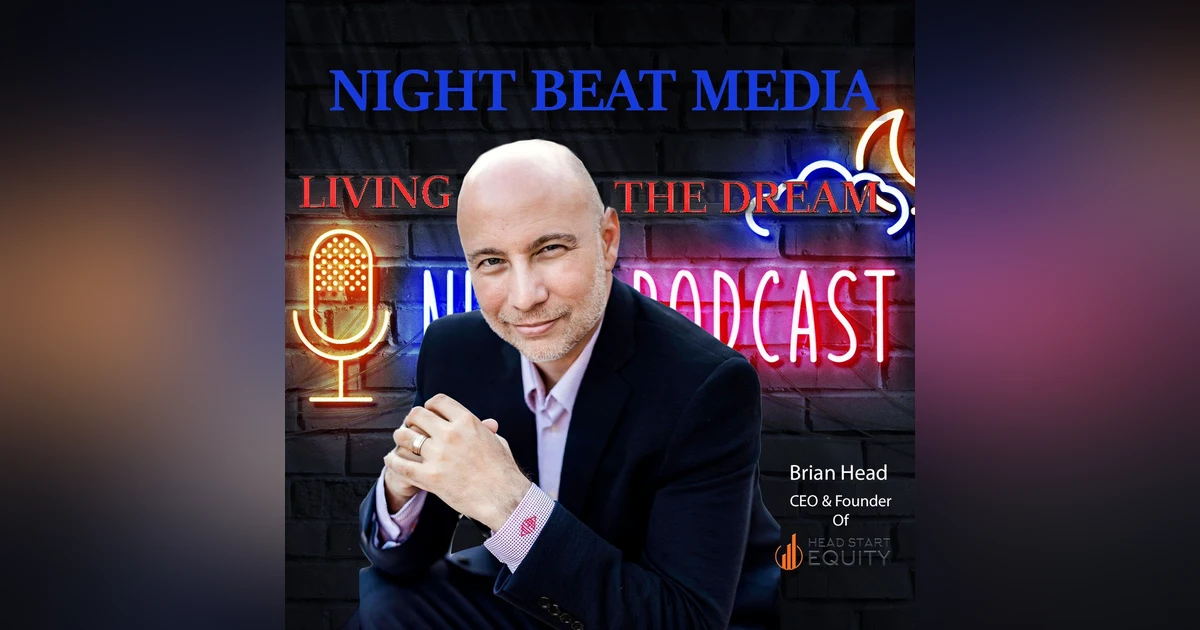

Join us as Brian Head, the visionary force behind Head Start Equity, unveils his transformative trajectory from a sharp investment advisor to a real estate titan with a commanding $400 million portfolio. Our exchange with Brian is a treasury of...

 Apple Podcasts

 Spotify

 Castro

 RSS Feed
Join us as Brian Head, the visionary force behind Head Start Equity, unveils his transformative trajectory from a sharp investment advisor to a real estate titan with a commanding $400 million portfolio. Our exchange with Brian is a treasury of acumen, as he dissects the intricacies of detecting hidden gems within multifamily properties and articulates why residential real estate is the cornerstone of his investment empire. His two decades of experience serve as a masterclass in navigating the real estate realm's opportunities and challenges, providing a poignant reminder that investing in properties extends far beyond finding a place to call home.
Strap in for a ride through the competitive battleground of real estate auctions and the nuances of seller financing as shared from Brian's frontline experiences. His insights are a wakeup call against the passive income fairytale, advocating for a proactive stance in property management. It's all about the educational hustle and the power of mentorship in this episode, where Brian lays out the roadmap for aligning with a mentor who resonates with your investment aspirations and the transformative impact a mastermind group can have when tackling complex deals. Our conversation is an arsenal of strategies and stories, empowering listeners to shatter the barriers of fear and charge confidently into the entrepreneurial fray, no matter the industry.
Become a supporter of this podcast: https://www.spreaker.com/podcast/night-beat-media-living-the-dream--2752105/support.
https://arkglobalpartners.com/
0:02 Welcome to night Beat Media's Living the Dream podcast with your host Gregory Tucker, where we discussed the entrepreneur's journey of turning a dream into reality, showing you how to learn, overcome, and acquire strategic action steps. If you're ready to turn your dream into a reality, then get ready to take action. Here's your host, Gregory Tucker answering that question, and that is if you've ever wondered what it takes to turn your dreams into reality, You're in for treat Today. Our guest, Brian Head, founder of head Start Equity, is about to unveil the secrets to his phenomenal success. Now. Brian has twenty years of experience. Brian is active and passively invested in two four hundred and sixty two units across eighteen properties, totally a whopping three hundred and ninety nine million dollars. He's a finance graduate from UTSA and worked as a licensed investment advisor for a decade. But here's the hook. Brian's journey isn't just
1:34 impressive, it's a masterclass. Brian, Welcome to the show. We always like to ask our guests this important question. Brian, tell us about you? Yeah, So I currently live in San Antonio, Texas. So actually born and raised here. I lived here all my life. I got married with two kiddos. I've got a five year old dollar and a twelve year old daughter. Of course they keep us pretty busy. But yeah, So I just to kind of give you a real quick rundown of I guess my career. I just recently so, I guess May of last year. I left a corporate job with a large financial services company here in San Antonio after nearly twenty five years. So, as you mentioned, I was a financial advisor and stockbroker for about half of that time, and the latter half of that I was kind of a business analyst type role, working with it and business folks. But during most of my career in the corporate world, I was also investing in real estate on the side. It was really my passion the whole time, so I've been doing that for over twenty years. My story, the beginning of my story is kind of similar to a lot of folks that get in real estate, bought some single family properties, started renting those out, and then started flipping properties as well, and then started getting into the smaller multifamily so duplex triplex. I've also invested a little bit in
3:06 Airbnb as well, and then a few years ago is when I got into the commercial, larger commercial space, investing in the one hundred plus unit apartment complexes, and so that's when things kind of really took off, and that was part of what provided me the opportunity to leave in May of last year after almost twenty five years at my corporate job. Okay, now, Brian, can you elaborate on your investment philosophy and the approach it comes to value added multifamily properties. Yeah, So, you know, I've always I've always been of the mindset that it's really best to try to if you're going to invest in real estate, to try to do it from a value ad standpoint, So trying to find a bargain kind of going in right. There's an old adage in real estate that you really make your money when you buy the property, So you know, trying to find that value add opportunity where there's an opportunity to you know, obviously add value through you know, making renovations and things like that, and so in the multifamily space, that's that's what we primarily look for, is you know, multi family properties where the units are innning for less than what the market is in the area, and usually that's because you know, they're either outdated or they're being poorly managed, or in most cases it's a combination of both. So that's primarily what we look for in the properties that we invest in. And after spending so much time
4:36 far as in financial services, why not transition into commercial real estate? Into commercial real estate or yeah, well, the multifamily the multi family properties that we invest in now are considered commercial, but in terms of like are you talking like office space or some of the other types of yeah, yes, So you know, it was much more It was a much more natural transition to do large multifamily because it's the same concept as doing single family rentals, just multiplied by a lot more units, and so it was a much more natural transition. Also, I tend to, you know, my belief you know, different real estate investors are going to have different beliefs, and I think there's good investment opportunities and all the different kind of commercial assets. However, I will say that I've always been a big believer in residential because people need a place to live, right, so that that's never going to change.
5:38 And specifically, you know, when it comes to residential there's been a housing shortage for quite some time now, and so that that helps present some some opportunities there. Okay, Now in going into real estate and being in it as long as you have, what are some of the lessons that you've learned along the way? Oh boy, there's there's a lot of lessons there. You know, one thing I don't I'm not ashamed to admit. You know, if really, if you're investing for any length of time and in any particular asset, you're going to lose money, right and and I've had my you know, I've I've lost money in real estate. And one of the lessons I learned early on was, you know, I was doing really well flipping single family properties and then I got into a property that was a larger property, much more expensive property, thinking, oh, I can you know, I can replicate the success that I've done in these smaller properties into this big, expensive property. And bottom line is I lost money on the deal. It took way longer to sell. There was a lot of extenuating circumstances. It could be a whole flip. This house episode on TV with all those stuff that that happened in that that flip. But there's there's a lot less buyers when you start higher price points you get to in real estate in terms of single family you know, there's there's less buyers out there.
7:04 And the timing of it wasn't great, and I probably over improved the property. You know, even my very first property that I flipped, I way over improved it. I was way too picky. You know, you hear a lot about you know, when you're investing in real estate, you have to make sure you look at it like an investment and not a house that you're going to have to live in. And with the first house that I flipped, you know, I got super picky. You know, this little run in the baseboard, you know, and all these different things and just way way over improved, did way too much stuff, got too picky, and it was really expensive. And however, you know, I did make a whopping eight hundred dollars on the property, but I learned a ton.
7:45 It was really the learning and probably even more than that, it was proving to myself that I could do it and taking that first step and getting over that hurle and getting over that fear of taking that, you know, investing in that first property and just going for it. I didn't even have have contractors lined up. I didn't know who was going to do the work on the property. I literally talked to the neighbor after I bought it, and they said, oh, hey, I've got a general contractor, buddy, that does work. And so I ended up using them, and you know, paid too much money for that. Again another learning you know, lesson that I learned there. But uh, but bottom line is if I hadn't taken that step, I wouldn't be where I am today. And so that was a huge learning opportunity but also allowed me to get over my fear.
8:28 Okay, now along this journey, were there any mentors or if you can go back and find that young Brian, would you would prefer to have a mentor at that time? And and I and I had, you know, some my my real estate agent that I was using at the time. You know, he kind of served as a as a little bit of a mentor for me, you know, he kind of he kind of helped nudge me. You know, I was literally having a conversation with him on the patio in the front of this house, and you know, I he looked at me and he was just like, Brian, you know, you just got to do it at some point. You know, you've read all these books, you've done all this education, You're at a paralysis by analysis standpoint.
9:13 You've just got to do it. And so he did help me get over you know, get over that fear and taking that first step. And you know, I did lean on him over the years to kind of help help guide me through some of what I was going through and some of the lessons learned. I think, you know, generally speaking, if you can learn from other's mistakes, that's some way better way to learn than making the mistakes yourself. You're inevitably going to make mistakes yourself. That's if you're not making mistakes, you're not taking risks, you're not taking chance, and you're not going to you know, you're not going to excel in life. Right. But yeah, he definitely helped me, and there have been other mentors along the way. But yeah, if somebody can find a mentor that can that can help them that they'll they'll kind of help shortcut some of the some of the experience. So you share with the of the obstacle that you faced in how you handled those. Were there any other milestones along your journey? Yeah, you know, so in terms of the transition from the single family space to the multifamily the larger type projects that I'm doing now. You know, one of the things we kind of had my wife and I had a life event back in twenty eighteen. She my wife, was diagnosed with breast cancer.
10:33 Fortunately she is cancer free now, she's doing great. But that life event really made both of us kind of stop and reflect on life and you know, what are we doing, Why are we doing what we're doing? Where do we see ourselves in the next five, ten, fifteen, twenty years. And so, you know, we tried to kind of turn a negative thing into a positive thing. And that was when I decided, you know, and we decide together that these larger multi family projects were going to help expedite the process a little bit. There's plenty of people that you know, can do really well and succeed and single family properties and scale that that wasn't for me though I didn't really want to. I didn't really want to go and purchase one hundred you know, single family properties to try to provide the income that we were looking for and everything, so decided it would be it would be a better option for scaling purposes to get into the multi family projects. And so that that life event is kind of what spurred head Start Equity and kind of started that process. Okay, and that's interesting that you brought that up, and that is what changes in the industry have you noticed over the years. Yeah, well, it's way more competitive. There are a lot more people investing in real estate than when I started. I mean, there was a decent number of people doing it when I started, but this was probably twenty two years ago. And you know, I kind of
12:07 a funny story, you know, I had funny but not so funny. I had a couple of properties that I did seller financing on to somebody recently, and I ended up having to basically they stopped making their payments. They hadn't made payments on it for like three months, and so I had to foreclose on the property, just like a bank would do. And I went here in San Antonio, the way the county does it when they auction off properties, you literally go to the courthouse steps and there's the different you know, trustees for the different properties are out there and they started talking about the property. And you know, back when I did this, when I started doing this twenty plus years ago, there would be a handful of people at this event. At these events right now, when I went, it was crazy because there was booths set up, there was this whole I mean, there was dozens and dozens of people there and you know, it was just it was just this whole spectacle. I was just like, this has changed so much from from when I first started. So I think it's gotten a lot more competitive. There's a lot of different you know, a lot of people trying to you know, figure out their niches in the in the space, and so there's a lot of people you know wholesaling meaning trying to get find a property, find a seller that's distressed that needs to sell it, and then get it under contract and then try to find a buyer after the fact. And you know, so there's just it's way more competitive than than when I started. There's still ways to succeed and do well. Plenty of people are doing it, but it's definitely more more competitive than it used to be. And I know that there's a lot of especially internet traffic, that
13:43 there's a lot, of course is being offered far as one real estate because one unique thing about real estate, and that is you can't make any more land or any more you know, it is what it is right there. You can't go out and create anymore you can build on it. So that's been one of the things that really I believe that that may have spurred ars like the New found gold rush. Right there is the actualization or the realization that hey, real estate, getting the property right there, holding on to it. Now, there's much more to it than just getting the property and saying, okay, now I have an ATM. I have the property.
14:45 I just put bodies in it, and it's like an ATM. Every time I go by this time of the month, it's just going to be spitting out change. Tell us about that. Rainbows and unicorns. Yeah, it's uh, it does crack me up when when so, first of all, there are a lot of there's tons of courses out there. There's so many that are just just, I don't know, ridiculous to me, Like I theoretically, yes, you know, no money down and all these great all these things that they tell you, Yeah, theoretically, yes, it's possible. It is possible, and there are ways to do it, and there are people that are successful with it, but it is, like you said, there's a lot more to it, and you know it is not you know, some people like to say, oh, you know, go get a single family rental house, it's a passive investment. Well, it's not a passive investment, you know. And even if you have a property management company that you hire to manage you for you, it's still not passive.
15:48 You know, they're they're still going to be coming to you for certain questions and things like that, and so it's it's not a passive investment and there's still decisions you'll have to make. But I personally, I've actually never used a property management company. Always managed my properties myself. Obviously, not the apartment buildings, that's not something that's possibly not feasible, but in the single family, small multi family space, I've always managed it myself. And you know that it's not passive. There's there there are some good courses out there, but I think, you know, for me, I think if I could give people one piece of advice on trying to get educated in real estate, whatever avenue you're going down, I would I would kind of go back to what you mentioned about finding a mentor and finding one that's local to you, because I think there's so many of these courses out there that are national and you know, do all this stuff online and that's great, but I think you really needed to be able to sit down with somebody, have coffee with somebody, and you know, just pick their brain a little bit, and you know, go with them to go check out a property and get their thoughts on certain things. And you can't do that if it's all virtual.
16:52 I mean, I guess technically you can, but it's not the same. And so, you know, even when I got into the multi family, these large multi family I joined a local mastermind group here in San Antonio, and that was one of the game changers for me in this space because I was able to get around people doing these large, you know, multimillion dollar deals that you know, before that, I always thought, well, you know, I don't have you know, a million dollars in cash sitting around to go put into a property. But then I was able to get in a room with people that were figuring out a way to do it, pulling money together, you know, investors and things like that, and so I think that's one of the biggest keys, is finding a mentor that will will really help you. And I would say, I would say that, you know, people that are serious about it interview some different mentors, don't just jump into the first one you find, and because they're not all quick created equal, and you may not, you know, you may not gel with that particular person, and I think that's super important. So yeah, that would be Yeah, it's it's not it's not all you know roses, and you know, there's definitely some challenges and you know, victions and things like that. I'm literally, you know, I've still got some of my single family properties now too. Diversification is important to me, so I'm holding onto some of those as well, and I'm literally going through an eviction process right now, so those things happen. And I would imagine also that each area, as far as the region that you're in, also has a lot
18:23 to do with that. So it's important that you know, Okay, I'm in the southwest or I'm in the east, then it's good to know far as what are some of the the nuances I would imagine versus you can't get it offline right there or just googling that sometimes you got to be in the area in order to really get a sincere feel far as for it, Yeah, for sure, I would totally agree with that. I think, you know, that's the whole boots on the ground theory, right, We're not really a theory, it's a thing. You know, you want to have boots on the ground. You want to have somebody there, local in that area, somebody that understands in the market. And you know that's why from a from an active standpoint, I've never actually gone outside of Texas to invest I mean, I've always stuck to the state. This is what I know.
19:18 And yeah, it's it is very different state to state. You know, some states are more landlord friendly than others. Right, Texas is considered a landlord friendly state. California is not. You know, it can take months and months and months and months and months. And you know what, after doing this for a while, one of the things that that does frustrate me a little bit is and there's bad landlords out there, don't get me wrong, but this whole you know, this this whole concept of you know, slum lords, and there are some of them, but you know, I think landlords tend to get clumped into all together by some people, and you know the reality of it is, you know, most real estate investors like myself, right, yes we're landlords. Yes we're collecting rent from people, but we have loans we have to pay too, and when tenants don't pay, that hurts us. And so it's it's you know, I had during COVID, I had I had a tenant actually call me up and tell me because you know, they were doing the they were pausing the evictions and stuff like that during COVID, which is fine, but I had a tenant call me up and say, uh, yeah, I heard I didn't have to pay my rent. The president said that we didn't have to pay our rent. I was like, no, that's not really, it's not really how this is. This is working. We can't evict right now, but if you don't pay that, you're just setting yourself up for in the future that's going to happen. So they just didn't government didn't want to create that hardship on people during that time. But you still are supposed to pay.
20:47 So it was kind of interesting. But yeah, there are some bad landlords out there, but there's there's a lot of good ones too. Yeah, that sounded like that was a little bit of selected hearing. Selective hearing right there. For it's so so uh. The main things FAR is for someone who's looking to go into the real estate business, such as yours, or to take on a journey such as yours. You had mentioned finding a mentor far someone that's local. So where are some of the places that a person would find. Would that be the national or the regional real estate association or how would they go about finding a Yeah, you could do that, you know pretty much. Now there are so many different meetups in every city now, different real estate investing meetups. You know, we have we have actually our own real estate investing meet up here in San Antonio called Wealth and Whiskey.
21:52 Kind of a pretty cool name. Buddy of mine came up with that name. But but there's so many, there's so many different meetups where you can meet a lot of interesting people who are doing these types of things. And I think that's one of your best bets is trying to find somebody at one of those meetups because most of them are free, you know, so you can just go during the week on an evening and just you know, try to find some folks that are like minded, that are willing to help you. One of the one of the biggest challenges, honestly is finding somebody that is willing to take the time because you know, just like any any industry, any any business, right, everybody is busy. You know, everybody only has so much time. And you know, time is very valuable.
22:36 You know, you can't get it back. So you know, finding somebody that's willing to work with you, you know, and if you can find that, and even better if you can find it with somebody that you know isn't going to charge you at arm andal a, you know that that's great. And and you know, just I think you just got to get out there and you just got to go to those meetups and you've got to try to find some folks that that are willing to help you out. That is so important right there. Now another thing, and that is just as when you were in the financial services business, where continuous education is important because the uh, the business is constantly changing. So give us your take on that right there, or give us suggestions as far as for this series.
23:30 Yeah, I think that you know, books are still a great way to educate yourself, you know, for me, when you know, kind of my first the first little seed planned for me and investing in general, was from my economics teacher in high school, where we had to He asked us to start tracking stocks and in the newspaper. This is back when there was no internet, so we were tracking the stocks in the newspaper. And that kind of, you know, put that seed in my mind. And then when I graduated high school, I just went to the library and just started checking out books and you know, learning everything I could. There were podcasts. There wasn't the Internet like there is now, so obviously now there's podcasts. You know, podcasts are great. It's a great way to learn a ton, and so podcasts, there's so much information on the internet. Again, mentors are a great way. But I think, you know, for me, I obviously I stay really connected with what's going on in real estate, but I'm I like to look at a much bigger picture too, of what's going on in the economy. I was just you know, I watched CNBC most days, you know, just to kind of get a pulse on what's going on, listen to different podcasts that have nothing to do with real estate that are more on the economy, where you know what's going on with interest rates, and you know, as much as I don't really like politics, I kind of keep up with some of that as well, just to stay you know, educated on what's going on because that can that can affect you know, you know, real estate values, that can affect you know, policy changes are big, you know, in real estate, especially when
25:02 it comes to taxes and stuff like that, and so I just think it's important to keep your education diverse and don't just you know, if you want to get into real estate, obviously you really need to dig in and go into that and research that, but don't limit it to that. Look at some of these other financial avenues as well, and keep yourself abreast of what's going on outside of the real estate market and how that can impact real estate. So, oh, that's a lot right there now, Brian. Brian, I know you're a very busy man, and I greatly appreciate you're taking the time to share as far as with the audience this valuable information because this could actually be applied far as to a variety of other industries. Now, before you leave or before we end this, could you give us some pointers or what would you like our audience to unpack. What are some of the most important things that they should go away or come away with. Yeah, I think you kind of Actually you mentioned it with the education piece. I think education is huge, and that's one of the reasons why I do what I do now, is because I actually love educating folks on real estate.
26:23 I could talk about it all day. I just have to, you know, temper it a little bit because I actually need to do some work too, But I could talk real estate all day. So I think education is important. You know, we also touched on fear a little bit earlier, and I think you know, and again, like you said, this could be applied to other avenues as well. But you know, the reality of its success is on the other side of fear, right, and so you've got to be able to get over that fear. In any avenue of business, you've got to be able to get past that. And you know that that's probably one of the things that stops most people from from getting very far, and especially entrepreneurs that that are looking to because it's a whole different corporate world is one thing, right, the corporate world, Yes, you have to work hard, and you have to do all that and you have to be creative and things like that, right, but things are more dictated to you in the corporate world. Right you're kind of told, here's the things you need to do. You know, this is how we're going to evaluate you and everything. When you're an entrepreneur, it's all on you, like the buck stops with you. You you you know, it's all based on you know, your success is all based on what you what you're able to do, your success of your business. And so I think getting over getting over fear is is just one of the one of the biggest things for people.
27:41 And you know it's not and it's not just jumping in and you know, haphazardly and not planning. I think you need to You need to plan and goes back to educating yourself and trying to set some things up. And you know, I fear is a big thing. And it obviously helped me back for a while too, because I was in a corporate job for a long time, but I was kind of I knew I wanted to be an entrepreneur and I knew that was real estate was what I wanted to do. But I still stayed in the corporate job, and some of that was security, right I had a great job for a great company and it provided the steady income and that that was great, but you know, it took. It took finally getting to the point where you know, okay, this is this is it, this is what I want to do. And again going back to life events that that that really played a vital role in that as well. But I think just getting over the fear is huge. That's that's probably one of the biggest things. Okay, well, that's great right there, because our audience is it's a diverse audience right there. And one of the things that we're finding out and that is that there's a lot of entrepreneurs that are over fifty five that are their first time out as far as in the field right there, because the landscape is constantly changing, so that those are some great words of wisdom right there. Brian, again, we thank you far As for taking the time and sharing with us your journey and how you turned your dream into a reality. So that way right there, our
29:14 audience who are listening and looking at this podcast, that they'll take those golden nuggets and apply it to their circumstances and at the end of the day, turn their dream into a reality and be intentional about it. Right there. Thank you, thanks for listening to night Beat Media's Living the Dream. If you enjoyed this podcast, please live a comment or hit follow and subscribe on our lake so you can stay up to date on new episodes until next time.
30:04 When writing the story of your life, be sure you're holding the pen